




Best Courses to Study in Germany for Indian Students 2027: Fees, Intakes & Job Outlook
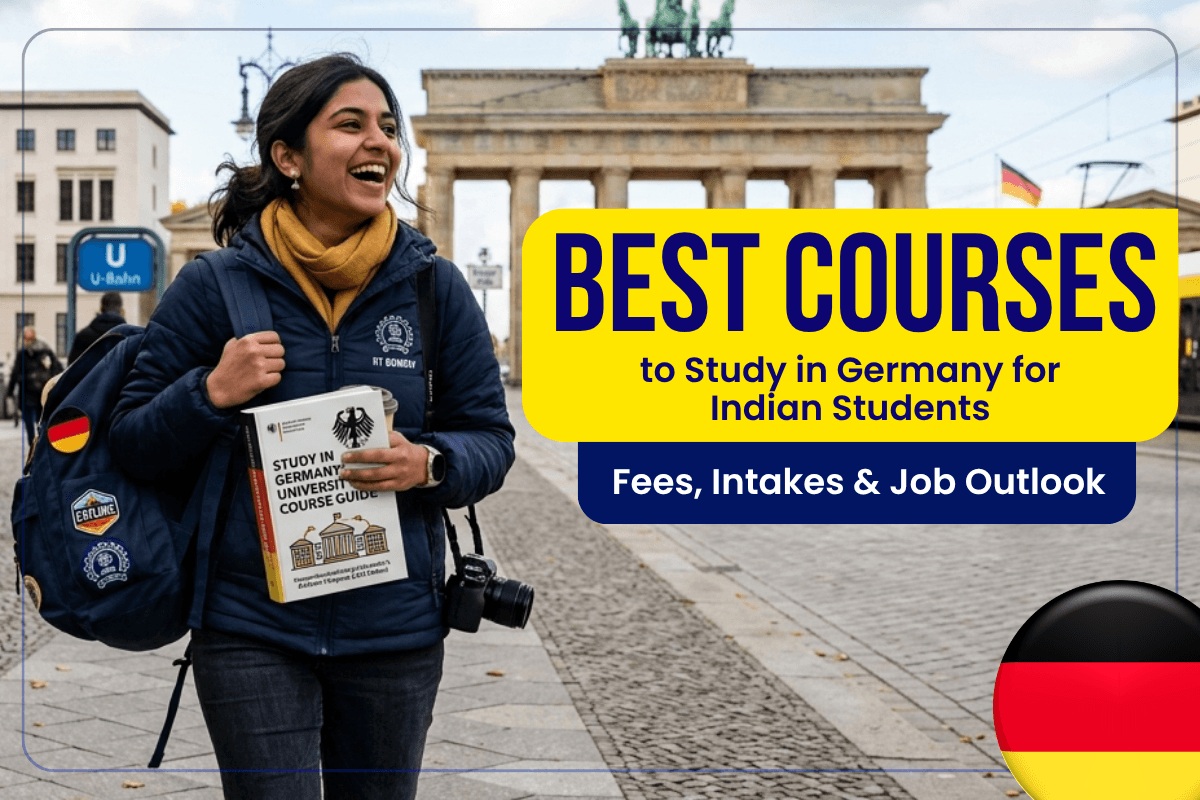
The best courses to study in Germany in 2027 for Indian students include engineering, computer science and AI, cybersecurity, business analytics, finance, renewable energy, biotechnology, and public health. Choose a course that matches your previous education, budget, and career plan.
DAAD reported almost 2,400 English-language degree programmes in Germany in summer 2025, including around 1,930 Master's programmes. Many public universities charge no general tuition for standard degrees, but some institutions and states charge non-EU students. For winter 2027/28, check each university's current admission rules, fees, and deadlines with a study in Germany consultant.
7 best courses to study in Germany for Indian students
|
Course field |
Specialisations to search for |
Typical academic background |
Career paths to explore |
|
Engineering |
Mechanical, electrical, automotive, civil, mechatronics, robotics |
Related engineering degree for most Master's courses |
Manufacturing, product design, automation, testing |
|
Computer science and AI |
Computer science, AI, data science, machine learning, software systems |
Computing, mathematics or engineering subjects listed by the course |
Software development, data analysis, AI research |
|
Cybersecurity |
IT security, network security, cryptography, secure systems |
Computer science, IT or related technical degree |
Security analysis, security engineering |
|
Business and finance |
Business analytics, supply chain, logistics, finance, FinTech, international management |
Business, economics or accepted quantitative subjects |
Business analysis, procurement, finance, operations |
|
Energy and environment |
Renewable energy, energy systems, environmental engineering, sustainability |
Engineering, physics or related science degree |
Energy projects, environmental assessment |
|
Biotechnology and life sciences |
Biotechnology, bioinformatics, molecular biology, bioprocess engineering |
Biology, chemistry, life sciences or relevant biomedical study |
Laboratory work, quality control, research |
|
Healthcare and public health |
Public health, biomedical sciences, health data, healthcare management |
Related health, science, statistics, or management background |
Public-health research, health analytics, health services |
Which courses can you study in Germany after Class 12 or graduation?
After Class 12: Indian students can explore bachelor's degrees in engineering, computer science, business, natural sciences, and other fields. Your school qualification must meet Germany's university-entry rules.
Some applicants need additional university study in India or a preparatory course called a Studienkolleg before starting a bachelor's degree.
After a bachelor's degree: You can shortlist Master's courses in Germany, including MS programmes in computer science, engineering, data science, cybersecurity, renewable energy, finance and biotechnology.
Universities check the subjects and credits from your previous degree. A general degree title or high CGPA alone does not guarantee eligibility.
Short courses and diplomas: Check the course provider, qualification, duration, and fees. A short course is not equivalent to a bachelor's or Master's degree and does not automatically provide the same post-study residence options. But good for you if you want to gain skills in specific industries and technical skills (such as IT, AI, digital marketing, or engineering).
Are English-taught courses available in Germany?
Yes. DAAD reported almost 2,400 English-language degree programmes in summer 2025, including around 420 bachelor's and 1,930 Master's programmes. English-taught options are more common at Master's level.
Search the DAAD programme database by subject, degree level, language and intake. Confirm accepted tests and scores on the university website; not every course accepts IELTS 6.5 or a medium-of-instruction letter.
You can also use GRADSearch to find the best courses to study in Germany.
Which German universities should you shortlist?
You can shortlist research institutions such as RWTH Aachen University, Technical University of Munich (TUM), Karlsruhe Institute of Technology, TU Berlin, Saarland University and the University of Stuttgart. This is not a ranking; compare each top German university on Gradstar’s website.
Cost to study in Germany
|
Cost item |
Planning figure or rule |
|
Student visa financial proof |
€11,904 for one year (€992 per month) in 2026 |
|
Living expenses |
About €900-€1,200 per month |
|
Semester contribution |
€100 to €400 per semester • Set individually by each university to cover administration, student union services, and frequently a local public transport ticket. |
|
Tuition |
Public universities in Baden-Württemberg charge €1,500 per semester for non-EU students, and specific institutions like the Technical University of Munich (TUM) charge program-specific tuition (typically €4,000 to €6,000 per semester for non-EU Master's programs). Private institutions typically range from €5,000 to €20,000+ per year. |
|
Health insurance |
€140 to €155 per month for public statutory student insurance (such as TK or Barmer), which includes long-term care insurance. Required for university enrollment and visa/residence permit processes. |
Is a Master's in Germany tuition-free?
Many standard public-university degrees have no tuition, but state and university rules differ.
-
Baden-Württemberg: Public universities charge non-EU/EEA students €1,500 per semester, subject to exemptions.
-
TUM: For non-EU/EEA students, Master's tuition will rise to €4,600 or €6,800 per semester from the winter semester 2027/28. The programme page states the applicable fee and exemptions.
-
Private universities: Most charge tuition. Check the full programme fee and payment schedule.
-
Other public universities: Read the university's own fee page before assuming a course is tuition-free.
Filter teaching language and tuition separately. English-taught does not mean tuition-free. See TUM's tuition guidance and Baden-Württemberg's fee guidance.
What are the Germany intake deadlines for 2027?
Germany's summer semester starts around April, and the winter semester around October. Winter is the main intake for many programmes, but some courses admit students in only one semester.
|
Intake |
Common deadline reference |
Next step |
|
Summer 2027 |
15 January 2027 is common |
Check the course page immediately; some deadlines are earlier. |
|
Winter 2027/28 |
15 July 2027 is common |
Prepare documents early; some Master's courses close in spring or early summer. |
What are the admission and APS requirements for Indian students?
Master's applicants generally need a recognised relevant bachelor's degree, transcripts, degree certificates, language proof, and the university's required documents. A CV and motivation letter are common; some courses ask for references, experience, a portfolio or test results. Indian applicants generally need an APS certificate unless exempt. Check the APS India checklist.
New for selected Master's applicants: APS India requires the Digital Master Test (dMAT) for applicants whose previous degree is in engineering, commerce/accounting/finance/economics, or business/management, for summer 2027 and later intakes. Exemptions apply to applicants who registered for APS or submitted complete documents before 29 June 2026, and those who already received an APS certificate for that procedure. The dMAT does not replace APS verification or university admission. Check the official APS guidance.
Which courses offer good job prospects after graduation?
Computer science, cybersecurity, engineering, finance, energy, and life-sciences degrees lead to different roles. Use job advertisements and the Federal Employment Agency's Entgeltatlas to compare pay by occupation and experience. Experienced workers' median salaries are not graduate starting salaries. Internships, projects, and German skills can strengthen your applications.
Graduates from outside the EU who complete a degree in Germany can apply for a residence permit of up to 18 months to look for qualified work. Applicants need proof of graduation, health insurance, and sufficient funds.
Download our study in Germany guide before planning your post-study route.
Can Indian students get scholarships in Germany?
Yes. Search the DAAD scholarship database and university funding pages. Check eligibility, documents, deadlines, and whether the award covers tuition, living costs, or selected expenses.
If you want to know about how to fund your study abroad, read our funding your studies guide.
What services does Gradstar offer for students wanting to study in Germany?
Gradstar offers free study-abroad counselling for students comparing courses and universities. A counsellor can help you organise a shortlist around your previous degree, academic record, budget, preferred teaching language, and intake. Before applying, confirm the tuition, eligibility rules, and deadline on the university's official page.
Final thoughts
For the best courses to study in Germany for the 2027 intake, start with courses that match your previous education and intended career. Engineering, computer science and data science, business analytics and supply chain, renewable energy, and biotechnology are useful areas to compare.
Check whether the programme is taught in English, read its subject prerequisites, calculate the full cost, and begin APS preparation early. Use winter 2027/28 as your main planning target if it offers the right course. Book a free one-to-one counselling session with Gradstar today.
FAQs
1. Which course is best in Germany for Indian students?
Engineering, computer science and data science, business analytics, renewable energy, and biotechnology are useful options to compare. The strongest choice is a programme that matches your previous degree, entry qualifications, budget, and intended job.
2. Are English-taught Master's programmes available in Germany?
Yes. DAAD reported around 1,930 English-taught Master's programmes in Germany in summer 2025. Search the DAAD programme database and confirm the language rules on the university's website.
3. Is a Master's in Germany free?
Many standard Master's programmes at public universities charge no tuition. Baden-Württemberg charges non-EU/EEA students €1,500 per semester, TUM lists Master's fees of €4,000 or €6,000 per semester for many non-EU students, and private universities charge tuition. Semester contributions and living costs still apply at tuition-free universities.
4. When should I apply for the 2027 intake?
For summer 2027, 15 January 2027 is a common deadline. For winter 2027/28, 15 July 2027 is common. Some programmes close earlier, so use the official course deadline rather than relying on these planning dates.
5. Do Indian students need an APS certificate?
Applicants using Indian academic documents generally need an APS certificate for the German student visa process, with official exemptions for specific categories. Check the APS India website and the German mission's current student visa checklist before applying.
6. What level of German is required to study in Germany?
German-taught degrees require proof of German at the level stated by the university, often B2 or C1. English-taught courses require the listed English-language proof. Learning German before arrival can also help with internships and job applications.
7. Can I stay in Germany after completing my Master's?
Graduates from outside the EU can apply for a residence permit of up to 18 months to search for qualified employment after completing their degree in Germany. They must meet the official residence, health insurance, and financial requirements.